

"The challenge for companies that enrich air first-rate is that it be invisible," stated Joseph Allen, director of the in shape constructions software at the Harvard T.H. Chan school of Public health.
or not it's proper: different Covid equipment are extra tangible. however visualizing how the virus may behave in poorly ventilated areas can assist individuals more suitable understand this mitigation measure.
Allen likens it to cigarette smoke. "If i'm smoking within the nook of a lecture room and you have low ventilation/filtration, that room is going to refill with smoke, and everybody is respiratory that identical air."
Then observe that to the outside.
"I can be smoking a cigarette, you could be a couple of ft from me, depending which way the wind changed into blowing, you may additionally now not even recognize i'm smoking."
when you are indoors, you may be inhaling less fresh air than you consider.
"each person in a room collectively is always breathing air that just came out of the lungs of different individuals in that room. And counting on the air flow fee, it may well be as a great deal as 3% or four% of the air you are respiration just got here out of the lungs of different individuals in that room," Allen said.
He describes this as respiratory backwash.
"consistently, it's now not an issue, appropriate? We do that all of the time. We're at all times exchanging our respiratory microbiomes with each different. but when somebody's sick and infectious ... these aerosols can carry the virus. it is an issue."
it's airborne
"we now have regularly occurring for a long time the way to preserve people protected in buildings from infection, from airborne infectious diseases like this one," Allen noted.
From the beginning of the pandemic, Allen and other specialists have waved red flags, asserting that the manner we had been considering transmission of Covid-19 -- surfaces, giant respiratory droplets -- become missing the factor.
"Hand washing and social distancing are acceptable however, in our view, inadequate to deliver insurance policy from virus-carrying respiratory microdroplets released into the air via contaminated americans. This issue is specially acute in indoor or enclosed environments, exceptionally people who are crowded and have inadequate ventilation," a whole bunch of scientists mentioned in an open letter in July 2020. finally, the world fitness corporation and the USA centers for disease manage and Prevention stated what the specialists had been saying all alongside: that Covid-19 may additionally unfold with the aid of small aerosolized particles that can trip greater than 6 feet.

The coronavirus itself is terribly small -- about 0.1 microns -- but that does not have an effect on how some distance it may possibly commute.
"The size of the virus itself would not count number as a result of, as we say, the virus isn't naked in air. In different phrases, the virus is at all times traveling in respiratory particles that boost in our lungs. and those are all diverse sizes," Allen mentioned.
Singing or coughing can emit particles as enormous as one hundred microns (very nearly the width of a human hair), he said, however the virus tends to travel in smaller particles -- between 1 and 5 microns.
The dimension of those particles influences not simplest how some distance it will possibly shuttle however how deeply we can breathe it into our lungs, and how we should still method holding ourselves from this virus.
"in case you're talking about an airborne disorder, there's the what's appropriate round you, you recognize, the form of the people who you understand can cough to your face, the 6 ft issue, and then there is the broader indoor air, because indoor air is recirculated," stated Max Sherman, a pacesetter on the Epidemic assignment drive for the American Society of Heating, Refrigerating and Air-Conditioning Engineers.
Dilute and clear
"outdoors is safer than indoors" has develop into an authorised mantra with Covid-19. Allen features out that holding ourselves indoors is the place our center of attention should at all times be, even beyond the pandemic.
"We're [an] indoors species. We spend ninety% of our time indoors. The air we breathe indoors has a large have an effect on on our health, no matter if you feel about infectious disorder or anything else, however it just has escaped the public awareness for a very long time," he noted.
Making sure our indoor air is match isn't that complicated, Sherman talked about. "You just want to cut back the number of particles that might be carrying Covid or any other nasty [virus]."
the style you do that is through ventilation and filtration.
Filtration -- just like it sounds -- is filtering or cleaning the air, casting off the infected particles. but suppose of ventilation as diluting the air. you might be bringing greater sparkling air in to reduce the attention of those particles.
Dilution is precisely why we have not seen superspreader movements outdoors, Allen says.
"we now have rarely any transmission outside. Why is that? unlimited dilution, since you have limitless air flow. And so, even in crowded protests or out of doors sporting routine like the super Bowl, we simply don't see superspreading happening. but when we did, we might have the signal be loud and clear. We just don't see it. or not it's all indoors in these underperforming, unhealthy areas."
match areas
Even before the advent of HVAC programs, air flow changed into integrated into many constructing designs.
The 1901 Tenement Housing Act of long island required each tenement constructing -- a constructing with multifamily households -- to have ventilation, running water and gas easy.
Builders introduced air flow to lots of these constructions with a shaft in the center that runs from the roof to the ground, allowing greater airflow.
"within the late nineteenth century, people are at last beginning to consider how sickness spreads. So airshafts and the accompanying air flow have been considered as a solution to the public fitness crises that have been happening in tenement structures," said Katheryn Lloyd, director of programming on the Tenement Museum. "there have been excessive cases of tuberculosis, diphtheria and different illnesses that unfold. Now we comprehend that unfold variety of during the air."
these days, we're facing the same problem.
"Getting simple ventilation to your house is critical, full cease," Sherman mentioned.
probably the most simplest, least expensive tips on how to do this is to open your windows.
Open doors or windows at opposite ends of your domestic to create go-air flow, the Environmental insurance policy agency advises. Opening the highest and lowest windows -- mainly if on distinct floors -- of a house can additionally boost air flow. adding an indoor fan can take it even extra.


simply cracking a window can assist an awful lot, Allen says: "Even propping a window open a pair inches to truly facilitate greater air alterations, notably if you do it in dissimilar places in the house, so that you can create some drive differentials."
or not it's important to observe that in case you have an HVAC equipment, it must be working to really circulate or filter the air. The EPA says that these methods run less than 25% of the time throughout heating and cooling seasons.
"lots of the controls this present day have a atmosphere the place which you can run the fan on low the entire time. and that is the reason constantly the neatest thing to do because that makes sure you are getting you might be pushing air in the course of the filter all the time and mixing the air up in your to your home," Sherman counseled.
This could be whatever to bear in mind if you're going to have company or if someone in the family is at bigger chance for severe sickness.
choose the surest filter your HVAC system can tackle, and make sure you mechanically exchange the filters.
Filters have a minimum effectivity reporting price, or MERV, rating that indicates how well they capture small particles. The American Society of Heating, Refrigerating and Air-Conditioning Engineers recommends using at least a MERV-13 filter, which it says is as a minimum 85% effective at shooting particles from 1 to three microns.
If it is now not an choice, moveable air filters can also work well, however the EPA says to make use of one it's made for the supposed room dimension and meets at the least one of these standards:discovering a safe area
if you happen to stroll into a space, there isn't a first rate rule of thumb to look around and gauge how neatly-ventilated it may be, and that may also be a challenge when people have been tasked with assessing their personal risk.
Allen suggests starting with the fundamentals: be sure you're up up to now with vaccinations and privy to the place Covid-19 numbers stand for your neighborhood.
however then it receives harder. Even the number of people in a space isn't a giveaway of a higher-possibility circumstance.
"The greater americans in there can be larger-chance since you're greater prone to have someone who's infectious, but when the air flow is first rate, it in reality doesn't be counted."
air flow standards are in line with "an amount of sparkling air per grownup, plus the volume of sparkling air per square foot," Allen defined. "So when you've got a great device, the greater americans that enter the room, the extra air flow is introduced in to the room."
One tool that may support you examine ventilation in a room is a CO2 computer screen, whatever Allen wishes he noticed extra in public spaces. He likes to carry a portable one, which you could order on-line for between $one hundred and $200.
"if you see under 1,000 parts per million, frequently, you might be hitting the air flow objectives which are the design average. however be aware, these don't seem to be health-based necessities. So we are looking to see greater air flow prices."
Allen prefers to peer CO2 at or under 800 components per million. He also notes that simply as a result of an area has low CO2 levels, it might no longer be risky if filtration is high, like on an aircraft.
A gamechanger for colleges
Atlanta Public faculties Superintendent Lisa Herring says the setting up of 5,000 air filtration gadgets -- adequate for every classroom -- in her school district is "a gamechanger."
The district had begun upgrading HVAC techniques in a couple of colleges even before the pandemic, but federal funding allowed it so as to add filtration contraptions right through a crucial time when masks have become optional.
"It gives a superior level of confidence for us as a system to grasp that our air filtration programs are in region," Herring spoke of.
school districts in every single place the country have been jumping at the chance for ventilation enhancements made viable by using an inflow of federal funding.
An analysis in February with the aid of FutureEd, a consider tank at Georgetown college's McCourt school of Public coverage, found that public colleges had earmarked $four.four billion for HVAC tasks, which might grow to very nearly $10 billion if tendencies persevered.
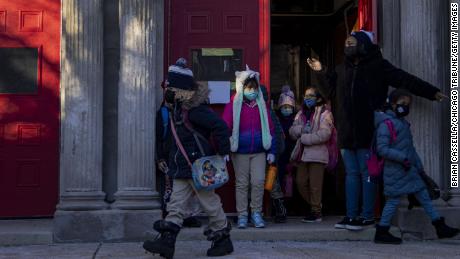
New Hampshire's Manchester college District is pouring essentially $35 million into upgrading HVAC systems, and intervening time Superintendent Jennifer Gillis says federal funding is "completely key."
"You consider a few district of our size with all of the competing demands and the deserve to be fiscally liable, a $35 million assignment, this is a huge assignment to introduce to our finances. Having these funds purchasable to us lets us do 19 initiatives -- and 19 tasks in a very brief span of time."
For Gillis, ventilation has been a crucial mitigation method and an unobtrusive solution to retain americans secure.
"or not it's something that the majority within the constructing do not suppose about, but it surely's a extremely passive way for us to create defense in the faculties. on account that the starting, the purpose turned into at all times 'let's get our kids in, let's get our group of workers in, but let's do it in a way it truly is protected for all of them.' "
respectable ventilation is never simplest about protecting students safe from Covid-19, Sherman says. it can additionally enhance their efficiency in faculty.
"they're going to study greater; they'll be awake greater; they're going to be greater receptive. they'll be healthier if they've acquired good indoor air quality," he pointed out.
eventually entrance and middle
helping solidify ventilation's position within the Covid-19 battle, the Biden administration introduced a clear Air in buildings challenge ultimate month.The challenge calls on building operators and homeowners to increase air flow with the aid of following instructions laid out by means of the EPA.
The main movements consist of making a clean indoor air action plan, optimizing sparkling air ventilation, improving air filtration and cleaning, and interesting the constructing community via communicating with occupants to raise recognition, commitment and participation.
The message may additionally seem overdue, but it surely's one which Allen enthusiastically welcomed.
"The White house used its pulpit to assert unequivocally that clear air and structures count. it truly is large. despite what you feel about what's going to occur subsequent with implementation or what occurs with the funding. this is a crystal-clear message it truly is already being heard by means of groups, nonprofits, universities and state leaders. I see these alterations happening already."




0 Comments